
eisvøgel
A Berlin notebook manufactory built on one idea: the cover stays, the contents get swapped.
- role
- Co-Founder
- years
- July 2016 – Oct 2022
- recognition
- German Design Award Nominee 2019
- outcome
- Sold October 2022
01The premise
Modularity is a sustainability strategy, not a feature.
Most notebooks are consumables. You fill one, you buy another, and the cover goes out with it — the part that carries most of the material cost and most of the footprint.
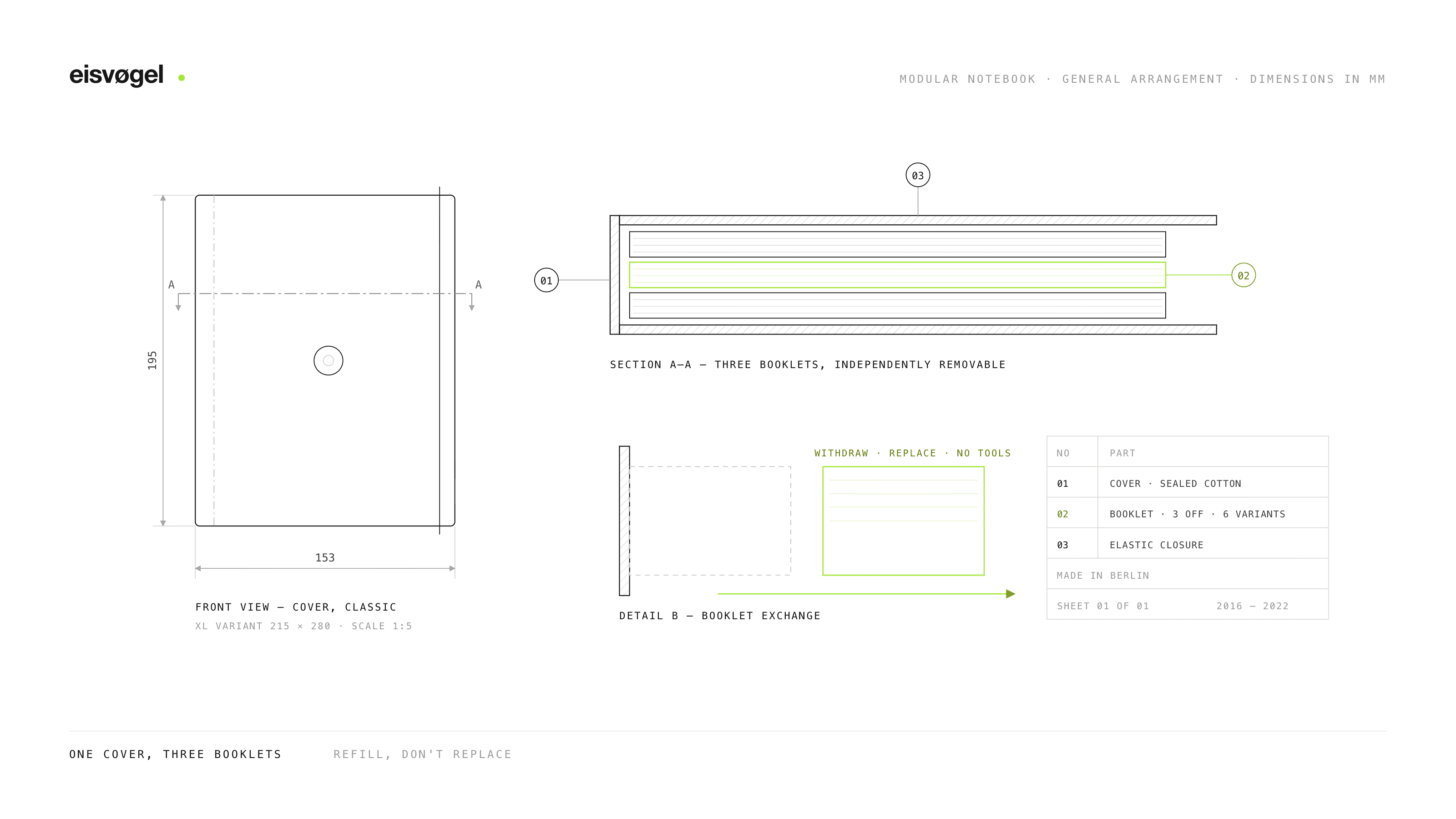
eisvøgel separated the two. One cover holds three booklets mechanically, and each booklet can be pulled out and replaced in seconds when it runs out. The cover is built to last years. Only the paper cycles through it.
That turned sustainability into a property of the product architecture rather than a claim about its materials. A notebook started at €39; a replacement booklet at €3.90. The cheapest way to keep using an eisvøgel was also the least wasteful one, which is the only arrangement that survives contact with real customers.
02The product
A configurable object with a small, deliberate parts list. The buyer picks a cover, then picks the three booklets that go in it.
- cover · classic
- 15,3 × 19,5 cm
- cover · XL
- 21,5 × 28 cm
- booklets per book
- Three, freely combined
- range
- Six booklet variants
Gepunktet
Dotted. Structure without ruling — the default for long notes.
Blanko
Blank. No lines, no grid, no interference.
Sketch
Extra-heavy blank stock for drawing and wet media.
Jahreskalender
Dated annual planner, one week per spread.
Wochenplaner
Undated weekly planner for people who think in calendar weeks.
ToDo
Checklists, with room on every page for the thinking around them.
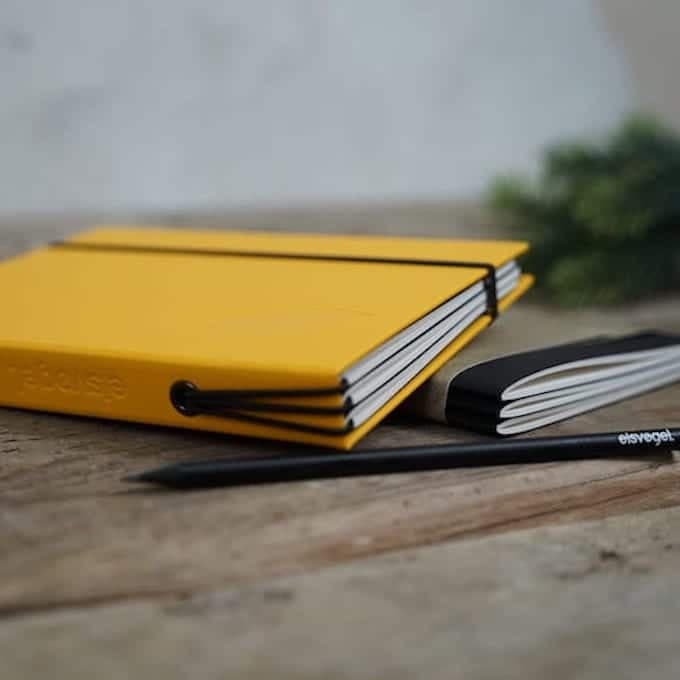
Three booklets, held by the cover and removable individually.
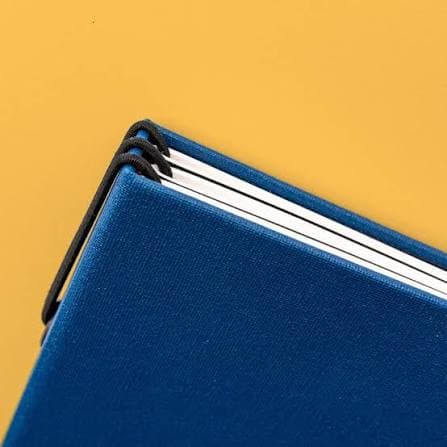
Sealed cotton, elastic closure, exposed booklet block.

The kingfisher, blind-embossed.
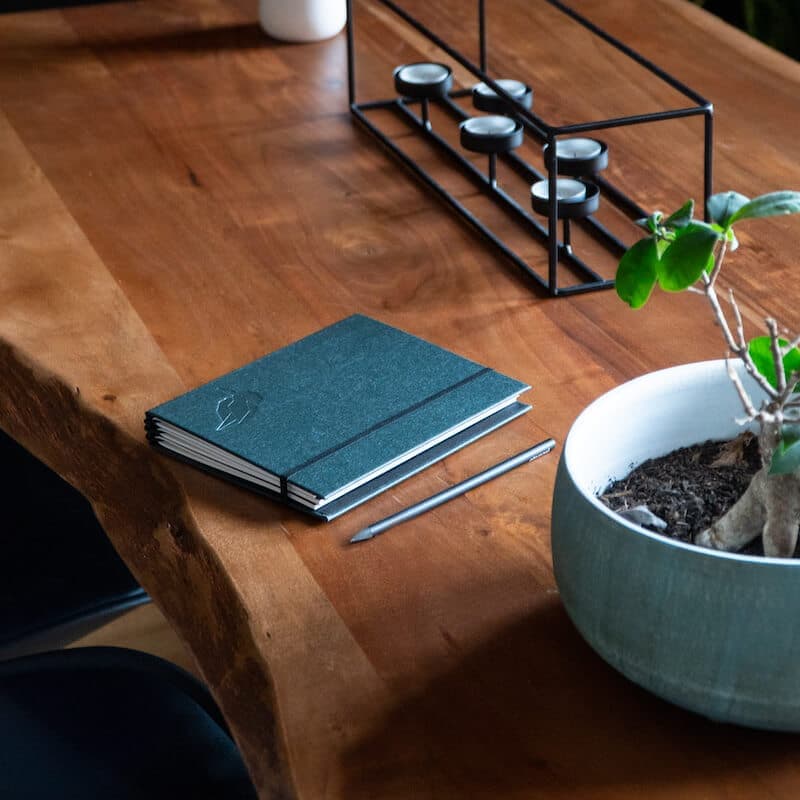
Classic format, 15,3 × 19,5 cm.
03What I owned
Product and range strategy
Which booklets existed and which did not. How many shipped inside a book, what a refill set contained, and where the line between a configurable product and an unmanageable catalogue sat. Three slots was the answer that kept the object simple and the stock list finite.
Brand and art direction
Name, mark, the ø, photography, packaging and voice. The category is crowded with premium notebooks that all look the same; the brand had to carry a Berlin manufactory's directness without turning into eco-signalling.
E-commerce
The shop was a configurator, not a product list. Cover first, then contents, then a returning-customer path that sold booklets on their own — the part of the funnel the refill model depends on.
Artist collaborations
Limited editions developed with Berlin street-art artists, hand-produced and finished in screen print. Each run was a single piece rather than a print of a design, which gave the brand a reason to exist beyond the mechanism.
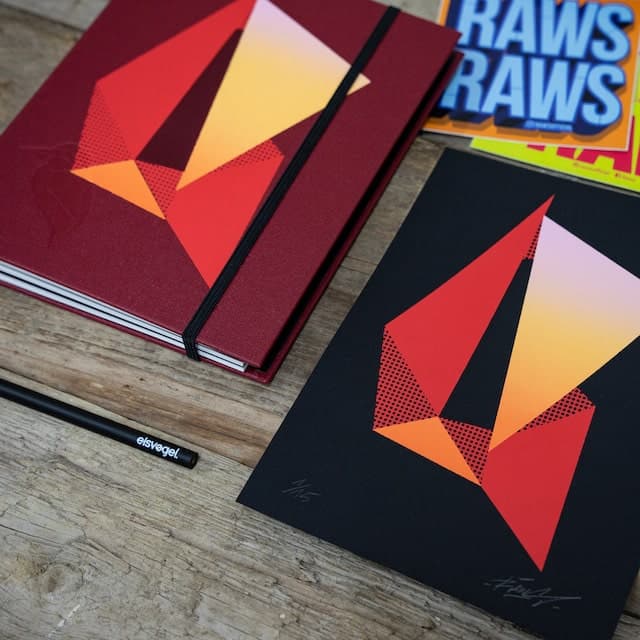
Edition with RAWS — cover and signed screen print.
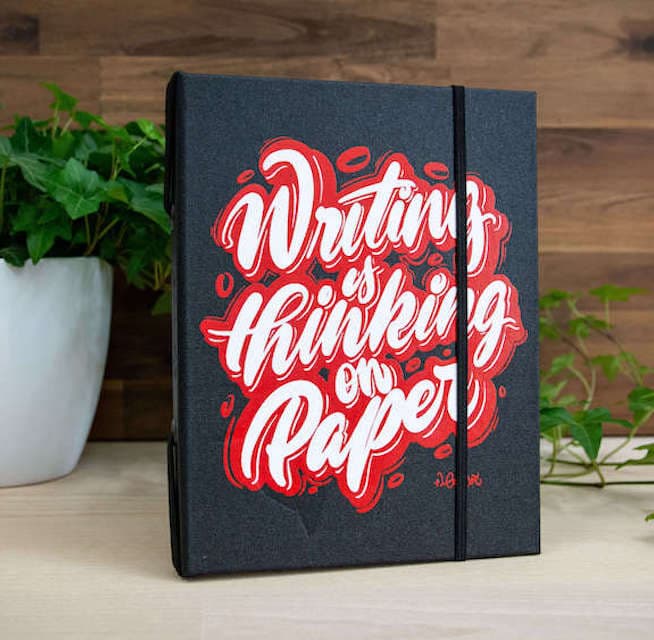
Edition with Hoker — hand lettering, screen-printed.
04Materials
Sealed cotton instead of leather. Paper selected on water consumption. Printing inks argued over on the basis of their carbon footprint. Production in Berlin, with local suppliers wherever the process allowed it.
None of that mattered as much as the swap. Material choices improve a single unit; a refillable cover changes how many units get made at all.
05Outcome
- 2016 — 2022Co-founded and ran product, brand and e-commerce.
- 2019German Design Award Nominee.
- October 2022Sold. The business continues today.
What carried over into software work: the discipline of a finite parts list, and the habit of designing the second purchase rather than only the first.